
🛠 Fault-Finding
Fault-finding – systematically tracking down electrical problems
Power outages, tripping fuses, RCD shutdowns, flickering lights, or sockets that suddenly stop working: electrical faults can have many causes.
Instead of replacing individual components on a hunch, I track down the cause systematically, using measurements and technical analysis.
As a fully qualified German master electrician and licensed Electricista Autorizado in Spain, I’m familiar with both the technical characteristics of Spanish electrical installations and the differences compared to German installations.
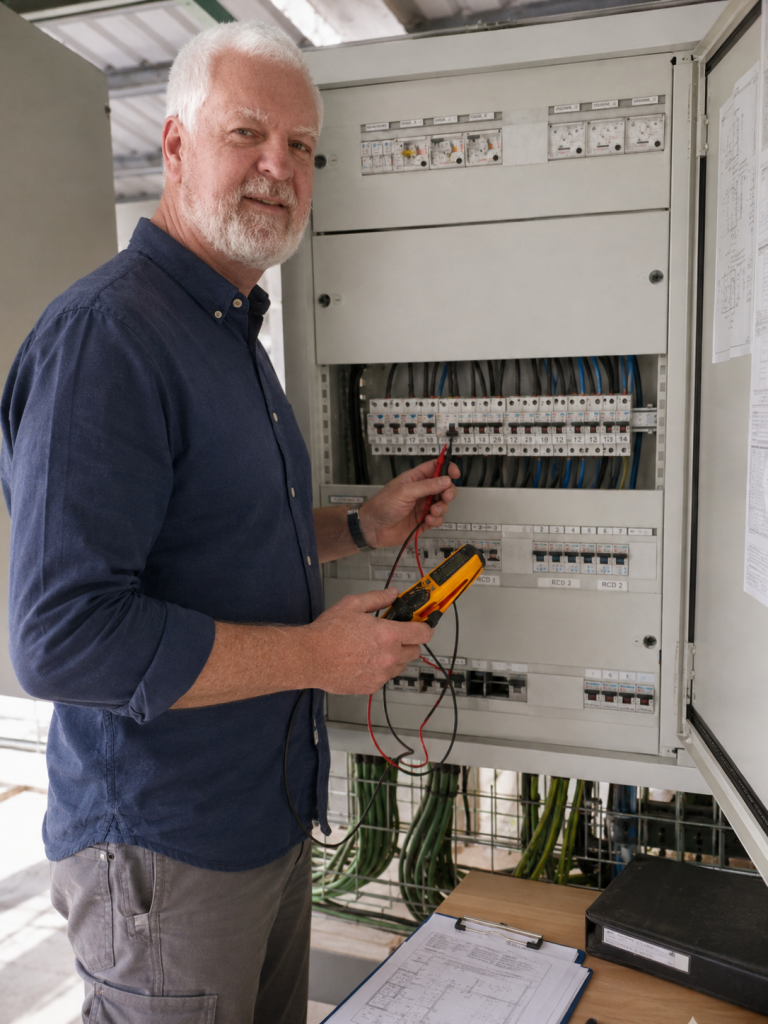
When something suddenly stops working
Spotting the fault is the first step – finding the cause is what counts
A tripped RCD or blown fuse is initially just a symptom. The actual cause can lie somewhere else entirely.
Possible causes include, for example:
- faulty or damaged cables
- insulation faults
- defective appliances
- dampness in the installation
- problems with protective conductors
- overloaded circuits
- faulty connections
- repeatedly tripping RCDs
- faults following renovations or extensions
- unknown problems in older installations
Typical fault-finding cases
When is systematic fault-finding worthwhile?
⚡ A fuse or RCD keeps tripping The system works initially, then suddenly a circuit fails or the RCD can no longer be switched back on.
💡 Lighting isn’t working properly Flickering, sporadic failures, or unusual behavior from switches and lights.
🔌 Sockets or individual circuits fail While other areas continue to work normally.
🏠 Problems after renovations Electrical problems suddenly appear after renovations or extensions.
🌧 Faults occur when it’s damp A particularly important clue, since dampness can cause insulation faults.
❓ Unclear electrical problems When nobody quite knows why a system isn’t working reliably.
How I approach fault-finding
Measuring instead of guessing
Fault-finding begins with a description of the problem and an initial visual inspection.
The installation is then systematically narrowed down using suitable measuring equipment. Depending on the fault pattern, this can include checking voltages, continuity, insulation, or protective measures.
The goal isn’t just to find the fault, but wherever possible to understand its cause as well.
Repair or further measures
You’ll find out what really needs to be done
After the fault-finding, I discuss the identified cause and the possible measures with you.
The result can be, for example:
- a clearly identified defect
- a necessary repair
- a damaged cable
- a faulty appliance
- a problem within the installation
- a safety deficiency
- or a recommendation for a more in-depth inspection
Not every fault automatically means the entire electrical installation needs to be replaced.
Fault-finding in Spanish electrical installations
German experience meets Spanish practice
Especially in older properties in Spain, fault-finding can be more challenging when the installation has been altered or extended over many years.
Different materials, older installation methods, later extensions, or undocumented changes can all be the cause of a problem.
Here, it’s not just the measuring equipment that helps, but also experience with how electrical installations in Spain have actually been carried out in practice.
Electrical check or fault-finding?
What’s the difference?
The electrical check is a general assessment of the condition and safety of an electrical installation.
Fault-finding, on the other hand, starts from a specific problem or noticeable issue. Here, the focus is on systematically searching for the cause.
Not sure which service you need? No problem — just describe the issue to me, and together we’ll work out what the sensible next step is.
Do you have an electrical problem and don’t know where the cause lies?
Give me a brief description of what’s happening. I’ll discuss with you what a sensible approach to fault-finding could look like.
Personal consulting available in German, English, or Spanish.